What Is THCA? Complete Beginner Guide

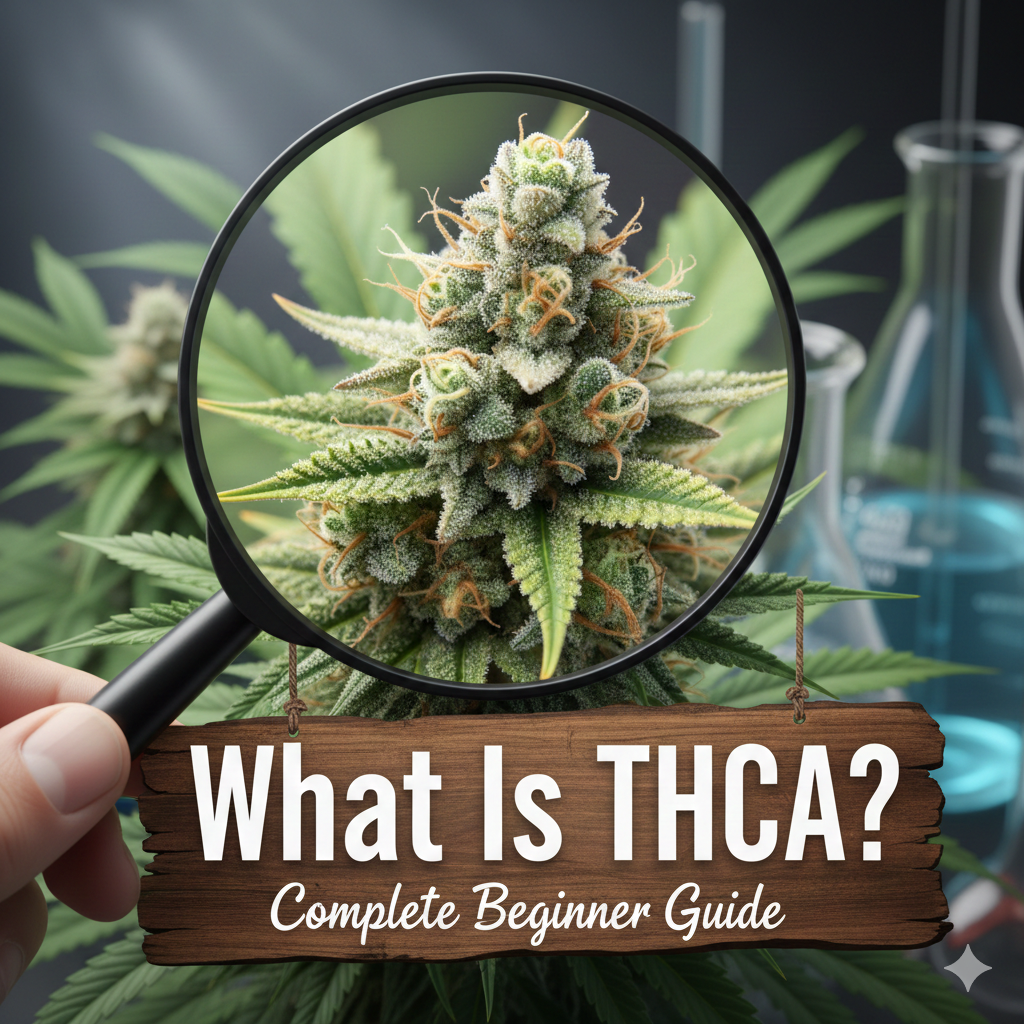
THCA, or tetrahydrocannabinolic acid, is a naturally occurring cannabinoid found in raw cannabis plants that has gained significant attention in recent years. While chemically related to THC, THCA behaves very differently in its natural state and offers unique properties that distinguish it from its more famous counterpart. This guide provides a comprehensive introduction to THCA for those new to this cannabinoid.
Chemical Structure of THCA
THCA is the acidic precursor to Delta9 THC, meaning it exists in cannabis plants before THC is formed. The molecular structure of THCA includes an extra carboxyl group (COOH) attached to the THC molecule, which fundamentally changes how the compound interacts with the human body.
This carboxyl group makes THCA a larger molecule than THC, which affects its ability to bind with cannabinoid receptors in the brain and body. The presence of this acidic group prevents THCA from fitting into the CB1 receptors in the brain that are responsible for the intoxicating effects associated with cannabis use. This structural difference is why raw cannabis containing high levels of THCA does not produce psychoactive effects when consumed without heating.
In living cannabis plants, THCA is the predominant form of tetrahydrocannabinol present. Fresh cannabis flower contains very little Delta-9 THC naturally; instead, it contains THCA that will later convert to THC through environmental factors or intentional processing. The plant produces THCA through its natural biosynthesis pathways as a defense mechanism and metabolic compound.
The chemical formula for THCA is C₂₂H₃₀O₄, while THC has the formula C₂₁H₃₀O₂, illustrating the difference of one carboxyl group (CO₂) between the two compounds. This seemingly small structural variation creates substantial differences in effects and properties.
Does THCA Get You High?
In its raw, natural form, THCA does not produce intoxicating effects. The carboxyl group attached to the THCA molecule prevents it from effectively binding to the CB1 cannabinoid receptors in the brain that mediate psychoactive experiences. People can consume raw cannabis containing high percentages of THCA without experiencing the euphoria, altered perception, or cognitive changes associated with THC.
However, when THCA is heated through smoking, vaporizing, or cooking, it undergoes a chemical transformation called decarboxylation that removes the carboxyl group and converts THCA into Delta-9 THC. Once this conversion occurs, the resulting THC can bind to CB1 receptors and produce intoxicating effects. This is why smoking or vaporizing THCA flower produces psychoactive experiences similar to traditional cannabis, even though the raw flower itself would not.
The potency of THCA flower when heated depends on the total THCA content and the efficiency of the decarboxylation process. THCA flower often contains high cannabinoid percentages, sometimes ranging from 20% to 30% THCA or higher. When fully converted through heating, this produces substantial amounts of active THC. Users should approach THCA flower with the same caution they would apply to high-potency cannabis products, especially if they are inexperienced with cannabinoids.
The effects experienced after heating THCA are essentially indistinguishable from those produced by Delta9 THC from any source. Users may experience relaxation, euphoria, altered sensory perception, increased appetite, and changes in time perception. The intensity and character of effects depend on the specific strain, the total cannabinoid and terpene profile, individual tolerance, and consumption method.
How THCA Converts to THC
The process of converting THCA to THC is called decarboxylation, a chemical reaction that removes the carboxyl group from the THCA molecule when exposed to sufficient heat. This transformation is essential for activating the psychoactive properties of cannabis.
Decarboxylation occurs at temperatures typically above 220°F (104°C), though the exact temperature and duration required for complete conversion vary. When cannabis flower is smoked, the combustion temperature easily exceeds this threshold, converting THCA to THC instantaneously as the smoke is inhaled. Vaporization operates at lower temperatures than smoking but still provides sufficient heat for decarboxylation, generally between 350°F and 400°F (177°C to 204°C), allowing for efficient conversion while potentially preserving more terpenes.
For edibles and cooking applications, decarboxylation must occur as a separate step before infusing cannabis into oils or butter. This typically involves heating ground cannabis in an oven at around 240°F (115°C) for 30 to 40 minutes, allowing the THCA to convert to THC before being incorporated into recipes. Without this decarboxylation step, edibles made with raw cannabis would contain primarily THCA and would not produce significant intoxicating effects.
The conversion process is not always 100% efficient. Some THCA may remain unconverted depending on heating duration, temperature consistency, and moisture content. Additionally, excessive heat or prolonged exposure can degrade THC into other cannabinoids like CBN, potentially reducing potency and altering effects.
Environmental factors can also cause gradual decarboxylation over time. Cannabis flower that is stored improperly in warm conditions or exposed to excessive light may slowly convert THCA to THC even without intentional heating. However, this natural conversion is much slower and less predictable than controlled heating methods.
Why THCA Flower Is Legal
THCA flower occupies a unique position in cannabis law, largely due to how the 2018 Farm Bill defines legal hemp and measures THC content. Understanding this legal framework helps explain why THCA products are available in many markets where marijuana remains prohibited.
The 2018 Farm Bill legalized hemp by defining it as cannabis containing no more than 0.3% Delta-9 THC by dry weight. This definition is critical because it specifies Delta-9 THC rather than total potential THC or THCA content. Raw cannabis flower can contain very high percentages of THCA while still maintaining Delta-9 THC levels below the 0.3% legal threshold, since THCA has not yet been converted.
Many legal interpretations of the Farm Bill focus on the distinction between THCA and Delta-9 THC as separate compounds. Under this interpretation, THCA flower derived from hemp plants that meet the 0.3% Delta-9 THC requirement remains federally compliant, even if the THCA content is substantial. The conversion from THCA to THC occurs after the point of sale when the consumer applies heat, not during cultivation or distribution.
This legal framework has enabled a market for THCA flower that is chemically and functionally similar to marijuana flower but is sold as a hemp product. Cultivators grow cannabis plants under hemp licenses, harvest them before significant natural decarboxylation occurs, and test the flower to verify Delta-9 THC compliance. The resulting product can then be sold in states without adult-use cannabis programs and shipped across state lines where legal.
However, this area of law continues to evolve. Some states have recognized the intoxicating potential of THCA and have enacted specific regulations addressing it. Certain jurisdictions measure total THC (including THCA) rather than just Delta-9 THC, which effectively restricts THCA flower. Other states have explicitly prohibited THCA products or included them under existing cannabis laws. The regulatory landscape varies significantly by location, and consumers should verify their state’s specific rules regarding THCA.
Federal agencies including the DEA and FDA have not issued comprehensive guidance specifically addressing THCA flower, leaving some legal ambiguity. This creates a situation where products are widely available under current interpretations of the Farm Bill while the regulatory framework continues to develop.
Best THCA Products to Try First
For those new to THCA, selecting the right product and approach can significantly impact the experience. Starting with quality flower products allows beginners to control dosage more easily and understand how THCA affects them before exploring other formats.
THCA flower represents the most straightforward introduction to this cannabinoid. High-quality THCA flower should come from reputable sources that provide third-party lab testing confirming cannabinoid content and verifying the absence of contaminants. Look for products with clear THCA percentages, typically ranging from 15% to 30% or higher. Certificates of Analysis should show not only THCA potency but also testing results for pesticides, heavy metals, and microbial contaminants.
When trying THCA flower for the first time, beginners should start with strains that have moderate THCA percentages rather than the highest potency options available. Products in the 15% to 20% THCA range provide a more manageable introduction than those exceeding 25% or 30%. The terpene profile also matters, as different terpenes contribute to the overall experience and can influence whether effects feel more energizing or relaxing.
Consumption method affects the onset, duration, and intensity of effects. Smoking provides the fastest onset, typically within minutes, making it easier to gauge effects and stop if needed. Vaporization offers a similar rapid onset while potentially providing smoother inhalation and better terpene preservation. Beginners should take one or two small inhalations initially, then wait 10 to 15 minutes to assess effects before consuming more.
Starting with small amounts is essential, especially for those with limited experience with cannabinoids. THCA flower, when heated, converts to THC that can produce strong effects. What seems like a small amount of flower can deliver substantial cannabinoid content. Using too much initially can lead to uncomfortable experiences including anxiety, paranoia, or overwhelming sedation.
Quality THCA flowers from established retailers provide consistent experiences and reliable product information. Products should include strain information, expected effects, THCA percentage, and harvest or production dates. Proper packaging protects the flower from degradation and maintains freshness, while clear labeling helps consumers make informed choices.
For those interested in exploring THCA flower products, options are available through licensed hemp retailers that prioritize quality, testing, and compliance. Taking time to research products, understand potency levels, and start with conservative amounts helps ensure a positive introduction to THCA.
Note: This article provides educational information about THCA and should not be considered medical or legal advice. Effects of cannabinoids vary by individual. THCA products may be restricted or prohibited in some jurisdictions. Consumers should verify local laws and consult healthcare providers before using cannabinoid products, especially if they have underlying health conditions or take medications.