Hemp-Derived THC: Federal Laws Explained Simply

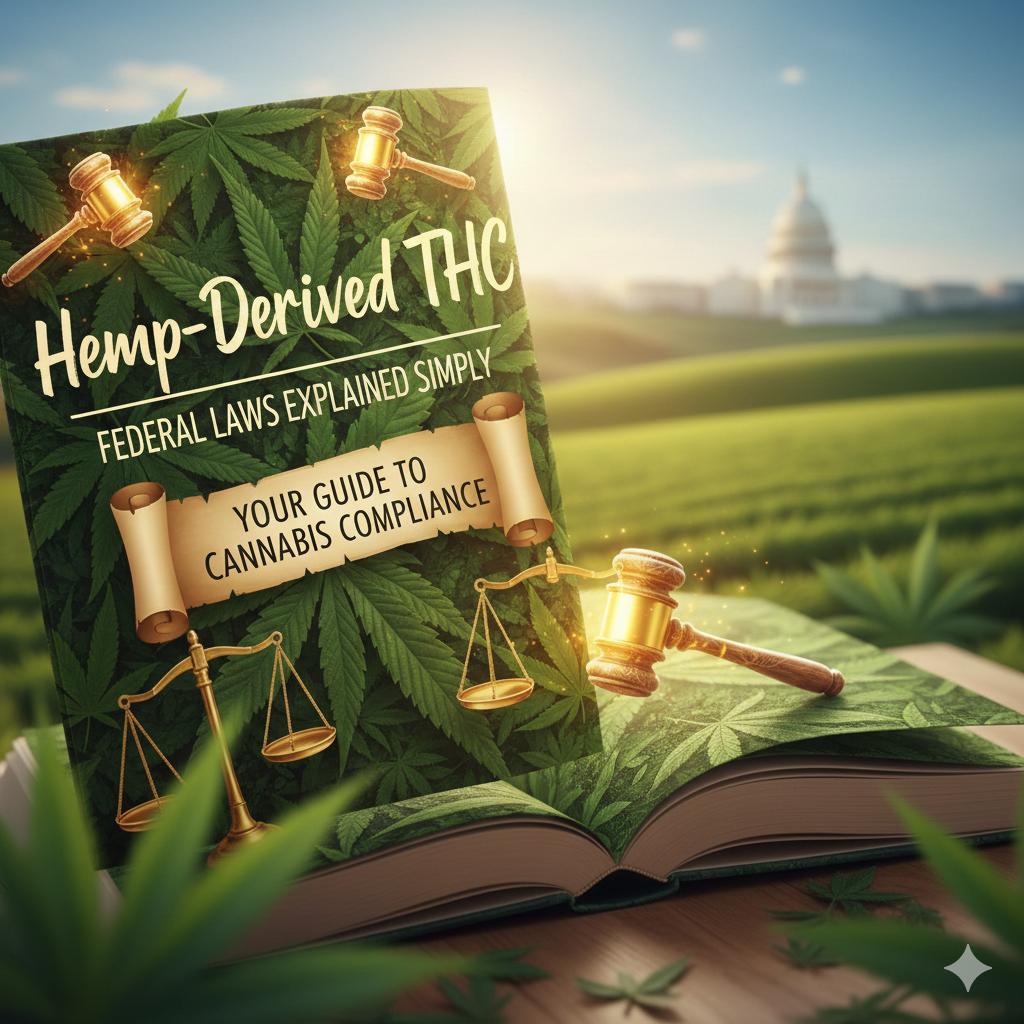
Understanding the legal status of hemp-derived THC requires navigating federal legislation that distinguishes between different types of cannabis plants. The 2018 Farm Bill created a legal framework that allows certain THC products to be sold and shipped across the United States, but only when they meet specific criteria. This guide breaks down the key concepts in straightforward terms.
What Is Hemp-Derived THC?
Hemp-derived THC refers to tetrahydrocannabinol that is extracted or synthesized from hemp plants rather than marijuana plants. While THC is the same chemical compound regardless of its source, federal law distinguishes between these two origins based on the Delta9 THC concentration in the plant material.
Hemp is defined under federal law as any cannabis plant containing 0.3% or less Delta9 THC by dry weight. When THC products are made from these legally compliant hemp plants, they can be classified as hemp-derived. This includes Delta9 THC itself when present in concentrations that keep the final product within legal limits, as well as other cannabinoids like Delta-8 THC, THC-P, and THCA that naturally occur in or can be derived from hemp.
The extraction and processing methods vary depending on the desired end product. Some hemp-derived THC products contain naturally occurring cannabinoids that are simply extracted and concentrated, while others involve chemical processes that convert one cannabinoid into another. Regardless of the production method, the critical legal factor is that the starting material must be federally compliant hemp.
Difference Between Hemp THC and Marijuana THC
From a chemical perspective, THC molecules are identical whether they come from hemp or marijuana. The distinction is entirely legal and based on the source plant’s Delta9 THC content, not the molecular structure of the cannabinoids themselves.
Marijuana is defined under federal law as cannabis plants containing more than 0.3% Delta9 THC by dry weight. These plants remain classified as Schedule I controlled substances under the Controlled Substances Act, making marijuana and its derivatives illegal at the federal level. Products derived from marijuana cannot be legally shipped across state lines and are only available in states with medical or recreational cannabis programs.
Hemp, by contrast, was removed from the Controlled Substances Act by the 2018 Farm Bill. Cannabis plants meeting the 0.3% Delta-9 THC threshold are considered agricultural commodities and can be grown, processed, and sold legally under federal law. Products derived from these hemp plants inherit this legal status, provided they continue to meet federal requirements.
This legal distinction has created a marketplace for hemp-derived cannabinoid products that produce similar effects to marijuana-derived products but remain federally legal. The 0.3% threshold applies to the plant material itself, not necessarily the final processed product, which has allowed manufacturers to create edibles, tinctures, and other items containing meaningful amounts of THC while staying within legal boundaries.
Why Hemp-Derived Products Are Legal Nationwide
The federal legalization of hemp-derived products stems directly from the 2018 Farm Bill, which redefined hemp and removed it from the list of controlled substances. This legislation was primarily intended to support American hemp farmers and recognize hemp’s industrial and agricultural applications, but it also created pathways for hemp-derived cannabinoid products.
Under the Farm Bill, hemp and its derivatives are legal to manufacture, possess, and sell as long as they comply with federal requirements. The key requirement is that products contain no more than 0.3% Delta9 THC by dry weight. Products meeting this standard can be transported across state lines without violating federal law, enabling nationwide commerce.
The U.S. Department of Agriculture oversees hemp cultivation through approved state and tribal plans, while the Food and Drug Administration has authority over hemp-derived products intended for human consumption. The Drug Enforcement Administration removed hemp from its controlled substances schedule following the Farm Bill’s passage. This regulatory framework establishes that compliant hemp-derived products are legal at the federal level.
However, it is important to note that federal legality does not override state authority. Individual states can choose to regulate or prohibit hemp-derived intoxicating products within their borders. Some states have embraced the hemp industry fully, while others have imposed restrictions on specific cannabinoids or product types. The nationwide legal status refers to federal law, but consumers must still verify that products are permitted in their specific state.
THCA and THC-P Under Federal Law
THCA and THC-P represent two cannabinoids that exist in a developing area of hemp regulation, with legal interpretations still evolving among industry stakeholders and regulatory agencies.
THCA, or tetrahydrocannabinolic acid, is the non-intoxicating precursor to Delta9 THC found in raw cannabis plants. In its natural acidic form, THCA does not produce psychoactive effects. It only converts to Delta-9 THC through decarboxylation, a process that occurs when the compound is exposed to heat through smoking, vaporization, or cooking. Many legal experts interpret THCA as falling within the 2018 Farm Bill’s definition of legal hemp, provided the Delta-9 THC content remains at or below 0.3% in the product’s pre-heated state. This interpretation has led to a market for THCA flower and concentrates that are sold as hemp products. The question of whether THCA should be measured separately from Delta-9 THC in compliance testing continues to generate discussion among regulators, and some states have created their own rules addressing THCA specifically.
THC-P, or tetrahydrocannabiphorol, is a naturally occurring cannabinoid discovered in cannabis plants in 2019. While it appears naturally in very small quantities, THC-P can be derived from hemp through extraction and processing methods. Because THC-P is chemically distinct from Delta-9 THC and can be sourced from federally legal hemp plants, it generally falls within the same legal framework as other hemp-derived cannabinoids like Delta-8 THC. Federal law does not explicitly prohibit THC-P, and products containing this cannabinoid derived from compliant hemp are considered legal under the Farm Bill’s provisions. However, as with other novel cannabinoids, regulatory guidance specific to THC-P remains limited.
Both cannabinoids illustrate the complexity of hemp regulation in a rapidly evolving market. Federal law provides a general framework through the 2018 Farm Bill, but specific guidance on newer or less common cannabinoids continues to develop. Responsible businesses operating in this space stay informed about regulatory developments and implement testing protocols to ensure their products meet current legal standards.
Singing Kush’s Compliance Practices
Operating legally in the hemp industry requires adherence to multiple regulatory standards and a commitment to transparency. Established hemp retailers implement comprehensive compliance measures that go beyond minimum legal requirements to ensure product safety and consumer protection.
Third-party laboratory testing forms the foundation of product compliance. Independent labs analyze every product batch for cannabinoid content, verifying that Delta9 THC levels remain within the federal 0.3% limit for flower products and that all cannabinoid claims are accurate. Testing also screens for potential contaminants including pesticides, heavy metals, residual solvents from extraction processes, and microbial impurities. Certificates of Analysis from these tests provide consumers with transparent documentation of what each product contains and confirm it meets safety standards.
Age verification prevents minors from accessing hemp-derived cannabinoid products. Compliant online retailers use verification systems that confirm customers are at least 21 years old before purchase completion. This typically involves third-party verification services that check government-issued identification or cross-reference public records databases.
Proper packaging and labeling ensure consumers have the information needed to make informed decisions. Products include clear details about cannabinoid content per serving and per container, complete ingredient lists, batch numbers corresponding to laboratory tests, and appropriate usage warnings. Child-resistant packaging is standard for edible products, and all labeling complies with applicable federal and state requirements.
Shipping practices respect both federal legality and state-level restrictions. While hemp-derived products are legal to ship under federal law, responsible retailers implement systems to identify states or localities with additional restrictions and decline shipments to those locations. This geographic awareness ensures compliance with the patchwork of state regulations governing hemp-derived cannabinoids.
These practices reflect an understanding that consumer trust depends on consistent adherence to legal standards and transparent business operations. As hemp regulations continue to evolve at both federal and state levels, maintaining robust compliance programs helps ensure that businesses operate responsibly within the legal framework.
Note: This article provides educational information about federal hemp laws and should not be considered legal advice. State cannabis and hemp regulations vary significantly and change frequently. Consumers should research their local laws and consult with legal professionals for guidance on specific situations.