
Household Safety: Storing Edibles with Kids or Pets Present | The Ultimate Child-Proof & Pet-Proof Food Storage Guide

You turn your back for thirty seconds to answer the door. In that fleeting moment, your toddler scales a chair like a mountaineer, and your curious dog’s nose finds the chocolate bar or cannabis edible you left on the counter… While practicing safe edible etiquette in social settings is crucial, securing them in your own home is the first line of defense.
Our kitchens are the heart of our homes, but they can also harbor hidden dangers. Proactive, intelligent food storage isn’t just about organization; it’s a critical, non-negotiable layer of family safety. This comprehensive guide will provide you with the knowledge, systems, and actionable steps to transform your home into a fortress of safety for every member of your family, both two-legged and four-legged.
Introduction: Why Your Pantry is a Hidden Hazard Zone
Beyond the simple clutter of boxes and cans, a typical pantry can contain a surprising array of risks. For children, its choking hazards and enticing but harmful substances. For pets, common human foods can be secretly toxic. The goal isn’t to live in fear, but in empowered preparedness.
The Urgency of Edible Safety
The statistics paint a clear and urgent picture. According to the American Association of Poison Control Centers, over 500,000 calls are received annually related to potential poison exposures in children under five, with a significant portion involving medications or household products found in kitchens and pantries.
For our pets, the danger is just as real. The ASPCA Animal Poison Control Center reports that over 10 percent of its cases involve human foods, with chocolate, xylitol, grapes, and onions consistently topping the list.
These aren’t just numbers. They represent preventable emergencies. This guide is your first and most important step in prevention.
What You Will Learn in This Ultimate Guide
By the end of this article, you will have:
- A clear understanding of the specific risks to children versus pets.
- Life-saving knowledge about the “Big Four” pet toxins and a step-by-step emergency response plan.
- The Three Pillars of Safe Storage, a simple, actionable system you can implement today.
- A downloadable “Danger Zone” checklist and emergency safety plan.
- A sustainable routine to make household safety automatic.
The Dual Threat: Understanding the Risks for Kids and Pets
Children and pets explore the world with their mouths, but their risks differ. Understanding these distinctions is key to effective protection.
Dangers Specific to Children
Childproofing focuses on physical safety and preventing accidental ingestion.
- Choking Hazards: Vigilance is required for small, hard, or round foods like nuts, hard candies, whole grapes, and popcorn. Always cut grapes lengthwise and supervise snack times closely.
- Accidental Ingestion of Non-Food Items: The kitchen often houses dangerous “look-alikes.” Dishwasher pods can resemble candy, and colorful medications can look like treats. The golden rule: Store ALL cleaning chemicals, laundry packets, and medications completely separate from food, ideally in a high, locked cabinet.
- Allergy and Sugar Risks: For families managing food allergies, secure storage of allergen-containing foods is paramount. More broadly, easy access to ultra-processed, high-sugar snacks can impact long-term health habits. A locked pantry helps manage moderation.
The Hidden Dangers in Your Pantry: Toxic Edibles for Pets
Many foods perfectly safe for us are poisonous to our pets. Awareness is your first line of defense.
The Big Four: High-Risk Toxins
- Chocolate (Theobromine Poisoning): Toxicity is dose-dependent. The darker the chocolate, the more dangerous. Baker’s chocolate and dark chocolate are severe threats, while milk chocolate is less potent but still risky. White chocolate has negligible theobromine.
- Action Insight: What to do if my dog ate dark chocolate? Do not panic, but act with speed. Theobromine affects the heart and nervous system. Even a small amount of dark chocolate for a small dog warrants an immediate call to the vet.
- Xylitol (Rapid Hypoglycemia & Liver Failure): This common sugar substitute is a stealth killer. Found in sugar-free gum, mints, peanut butter, baked goods, and even toothpaste, it causes a massive, rapid release of insulin in dogs.
- Action Insight: Xylitol poisoning symptoms in dogs, such as vomiting, weakness, and collapse, can appear in as little as 10 to 60 minutes. It is a true emergency where every minute counts.
- Grapes & Raisins (Acute Kidney Failure): The exact toxic compound remains unknown, making this particularly frightening. Sensitivity varies, but there is no safe dose.
- Action Insight: Why are grapes and raisins toxic to dogs? The answer is we don’t fully know, which is why a zero-tolerance policy is the only safe approach. Even one grape or raisin can cause irreversible kidney damage in a sensitive dog.
- Allium Family (Onions, Garlic, Chives): These vegetables, in all forms (raw, cooked, powdered), contain compounds that damage red blood cells, leading to hemolytic anemia. Cats are exceptionally sensitive, and toxicity can be cumulative over time.
Immediate Steps for Pet Accidental Poisoning
If you suspect your pet has ingested a toxin, follow this sequence:
- Secure & Assess: Safely move your pet away from the substance. Gather the product packaging, estimate how much was ingested, and note the exact time. This information is critical.
- Call for Expert Help IMMEDIATELY: Do not rely on internet searches. Contact a professional poison control center:
- ASPCA Animal Poison Control Center: (888) 426-4435 (A consultation fee may apply)
- Pet Poison Helpline: (855) 764-7661 (A consultation fee may apply)
- Be ready to tell them: Your pet’s species, breed, age, weight, the suspected substance, the approximate amount, and the time of ingestion.
- Call Your Vet or Emergency Vet: Alert them that you have a potential poisoning case and are on your way, following the instructions from poison control.
Critical “Do Not” Warnings
- DO NOT induce vomiting unless explicitly instructed to do so by a veterinarian or poison control expert.
- DO NOT administer hydrogen peroxide, salt, or any other home remedy. These can cause severe tissue damage or other complications.
- DO NOT adopt a “wait and see” approach. With toxins, you are always racing against the clock. Symptoms often appear after irreversible damage has begun.
The Three Pillars of Safe Storage: Child-Proof and Pet-Proof Food Storage
Creating a safe home hinges on a simple, three-part strategy. Implement these pillars room by room.
Pillar 1: High & Locked (Cabinet/Pantry Solutions)
The most effective barrier is physical. Consider this: the average emergency vet visit for poisoning can cost between $250 to over $5,000, while a set of high-quality cabinet locks costs less than $25. It is the most impactful investment you can make.
- Magnetic Locks (Best for Kids): These locks are installed inside the cabinet, invisible from the outside. They require a magnetic key to open, offering a clean look and robust security for frequently used cabinets.
- Strap or Slide Locks (Good for Kids & Pets): These are easy to install and act as a visible deterrent. Ensure you choose models strong enough to resist the persistent pawing or nosing of a determined dog.
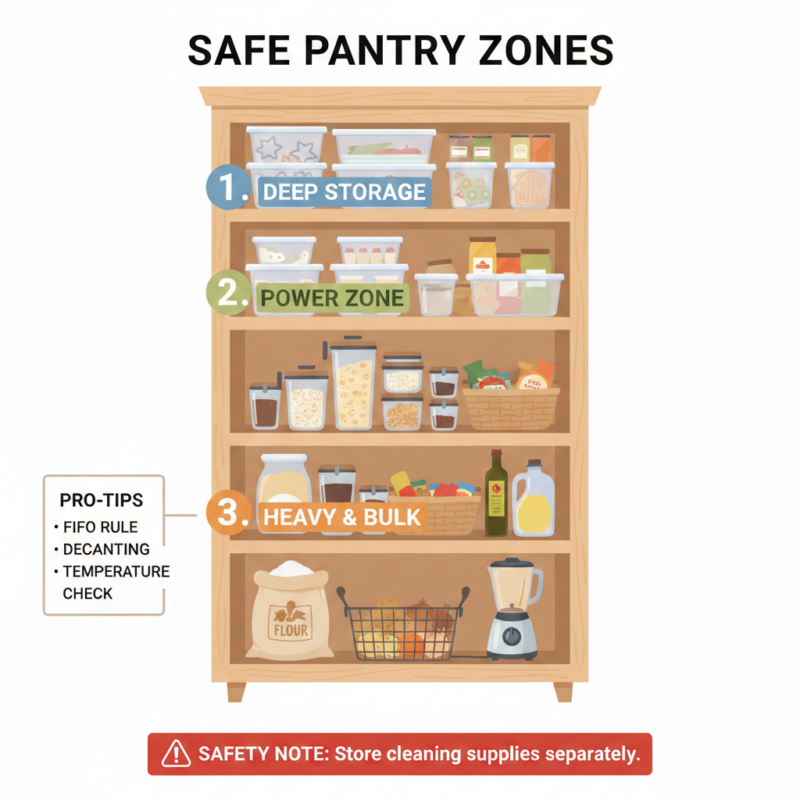
- The “Upper Shelf Rule”: Designate the upper shelves of your pantry as the “High Risk Zone.” This is where all toxic items (chocolate, medications, xylitol products) and choking hazards should live.
- RED ZONE (Top Shelves): High Risk. Medications, toxins, chocolate, gums.
- YELLOW ZONE (Lower Shelves): Medium Risk. Locked. Snacks, pet treats, baking supplies.
- GREEN ZONE (Bottom): Low Risk. Unlocked. Pots, pans, Tupperware, unbreakable cookware.
Pillar 2: Container Security (Airtight and Tamper-Proof)
Locks secure doors, but containers secure the items inside. The right container adds a second layer of defense.
- For General Pantry Staples: Heavy glass jars with locking, clamp-top lids are ideal. They are impossible for pets to chew through, keep food fresh, and provide a clear view of contents.
- For Bulk Items & Pet Food: Invest in heavy-duty, BPA-free plastic bins with robust, snap-locking lids or screw-top Gamma Seal lids. Flimsy containers with simple clips can be pried open by clever pets or determined toddlers.
- Pet-Safe Food Storage: A dedicated, airtight bin for your pet’s kibble and treats serves two purposes: it maintains freshness and prevents a counter-surfing pet from gorging themselves if they manage to access the pantry.
Pillar 3: Out of Sight, Out of Mind (Strategic Placement)
The final pillar is about habits and environment.
- The Counter Clean Rule: Make it a non-negotiable habit: never leave high-risk foods unattended on counters, tables, or in open bags. This includes fruit bowls with grapes, plates with leftovers containing onions or garlic, and that morning muffin.
- Bag & Purse Protocol: Instruct family members and guests to store purses, gym bags, backpacks, and lunchboxes in a closet or on a high hook. These are common sources of gum, snacks, and medications.
- Training as a Backup: While teaching your dog a reliable “Leave It” or “Drop It” command is invaluable, it should be considered a safety backup, not your primary strategy. Never rely on obedience alone to prevent an incident.
The “Danger Zone” Edibles Checklist
Use this quick-reference list to audit your home.
Top 5 Foods/Items to Lock Away from Kids
- Alcohol & Cannabis/THC Edibles: Extremely toxic in small doses to children. Must be in a locked container, never in food-like packaging.
- All Medications: Prescription and over-the-counter. Keep in their original child-resistant containers, inside a locked box or cabinet.
- Small Choking Hazards: Nuts, hard candies, popcorn, whole grapes.
- Cleaning Products & Pods: Store in a high, locked cabinet. Never under the sink, even with a lock, as this is the first place children look.
- Button Batteries & Small Magnets: Often found in toys, remotes, and electronics. If swallowed, they can cause fatal internal burns or blockages.
Top 5 Foods Toxic to Pets
- Chocolate & Caffeine
- Xylitol (in gum, peanut butter, baked goods, toothpaste)
- Grapes, Raisins, & Currants
- Onions, Garlic, Leeks, & Chives
- Macadamia Nuts & Moldy Foods (which can contain tremorgenic mycotoxins)
Post-Grocery Unpacking Protocol
Implement this 5-minute routine every time you come home from the store:
- Sort on the Counter: Immediately create a “Danger Zone” pile as you unpack. This includes any chocolate, sugar-free products, gum, medications, and toxic foods.
- Secure First: Before you put away the milk or produce, take the “Danger Zone” items and place them directly into their designated high or locked storage. Do not set them down “just for a moment.”
- Inspect Pet Items: Quickly check the ingredient list on new pet treats or chews for hidden garlic powder or other questionable additives.
Emergency Contact and First Aid Plan
Preparation is the key to calm action in a crisis.
- Create a Visible “Emergency Safety Card”: Post this on the refrigerator and in your family command center.
- Includes: Parent cell numbers, pediatrician, nearest pediatric ER, primary veterinarian, 24/7 emergency veterinary clinic, ASPCA Poison Control (888) 426-4435, and your home address (crucial for babysitters or pet sitters).
- Know Your Route: Physically locate your nearest 24/7 veterinary emergency clinic. Save the address in your phone’s mapping app. In a panic, you won’t want to search for it.
Conclusion: A Safer Home Starts Today
Transforming your home into a safer space doesn’t require a complete overhaul overnight. It begins with a single, conscious step.
Summary of Key Takeaways
Remember the Three Pillars: High & Locked, Container Security, and Out of Sight. This framework, combined with knowledge of the specific risks to kids and pets, empowers you to identify and neutralize hazards proactively. The mindset shift from reaction to prevention is your most powerful tool.