
THCP: The Cannabinoid That Redefined Potency

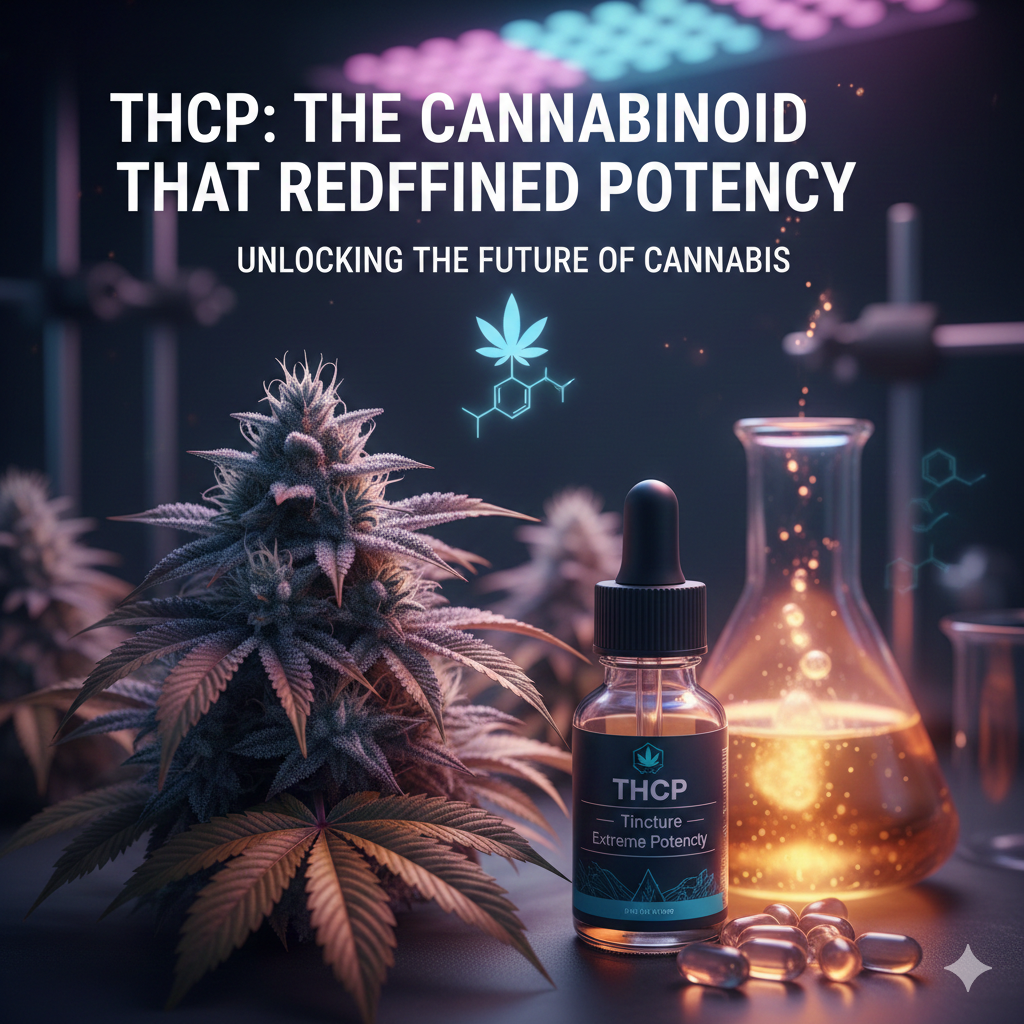
Most people familiar with cannabis know THC as the primary compound responsible for its intoxicating effects. But in 2019, researchers made a discovery that shook the cannabis science world: THCP, a cannabinoid that appears to bind far more strongly to the body’s receptors than THC.
The result?
A lot of questions, and a lot of misconceptions.
If you’ve heard claims about THCP being “33 times stronger” or “the future of cannabis,” let’s break down what’s actually true, what’s still being studied, and why this compound matters.
🔍 What Exactly Is THCP?
THCP stands for tetrahydrocannabiphorol, a naturally occurring cannabinoid found in extremely small amounts in some cannabis varieties.
The discovery was significant because THCP has a longer alkyl side chain (seven carbon atoms) compared to THC’s five. That small structural difference may greatly affect how the molecule interacts with the body’s CB1 receptors, which play a major role in psychoactive effects.
Early research suggests that THCP:
- Binds more strongly to CB1 receptors
- May produce stronger intoxicating effects at smaller amounts
- Could explain why some strains felt “stronger than expected” before its discovery
But it’s important to note:
👉 Most potency claims are based on lab binding studies, not human clinical trials.
Research is still developing.
🧠 Why Potency Discussions Around THCP Are Complicated
The now-famous “33 times stronger than THC” statement came from a receptor binding study that showed THCP binding much more aggressively to CB1 receptors than THC.
But here’s the nuance:
- Binding affinity ≠ real-world potency
- Human testing has not yet confirmed those ratios
- Dosage, metabolism, and delivery method still matter
- Natural cannabis contains only trace amounts of THCP
So, while THCP may produce stronger effects, the magnitude of that difference in humans is still unclear.
⚖️ Where THCP Fits Into Current U.S. Regulations
THCP is new enough that many states have not explicitly categorized it. Its legal status often depends on:
- How it was derived (hemp-derived vs. marijuana-derived)
- State-specific cannabinoid rules
- Total THC and intoxicating cannabinoid limits
- How regulators interpret the Federal Analogue Act
Some states treat all intoxicating cannabinoids similarly. Others define legality based on delta-9 THC alone.
Because interpretations vary, THCP exists in a rapidly evolving legal landscape.
🧬 How THCP Works in the Body
Like THC, THCP interacts with the body’s endocannabinoid system (ECS) specifically the CB1 receptor. This receptor is involved in:
- Mood
- Perception
- Coordination
- Reward pathways
- Short-term memory
THCP’s longer side chain may allow it to “grip” the receptor more tightly, potentially impacting how strongly it activates those pathways.
⚠️ Important Public-Health and Safety Considerations
Because of its heightened receptor affinity, THCP may cause:
- Stronger intoxicating effects
- Increased likelihood of anxiety or over-intoxication
- More pronounced impairment
- Stronger interactions with alcohol, medications, or other substances
Researchers note that more studies are needed before its safety profile is fully understood.
📝 Bottom Line
THCP is a fascinating discovery that expands our understanding of cannabis chemistry. While early research suggests it binds strongly to CB1 receptors, real-world effects depend on dosage, delivery, and individual physiology. As laws evolve and more studies emerge, THCP will continue to be a topic researchers and policymakers watch closely.