Delta-9 THC: A Closer Look at the Most Well-Known Cannabis Compound

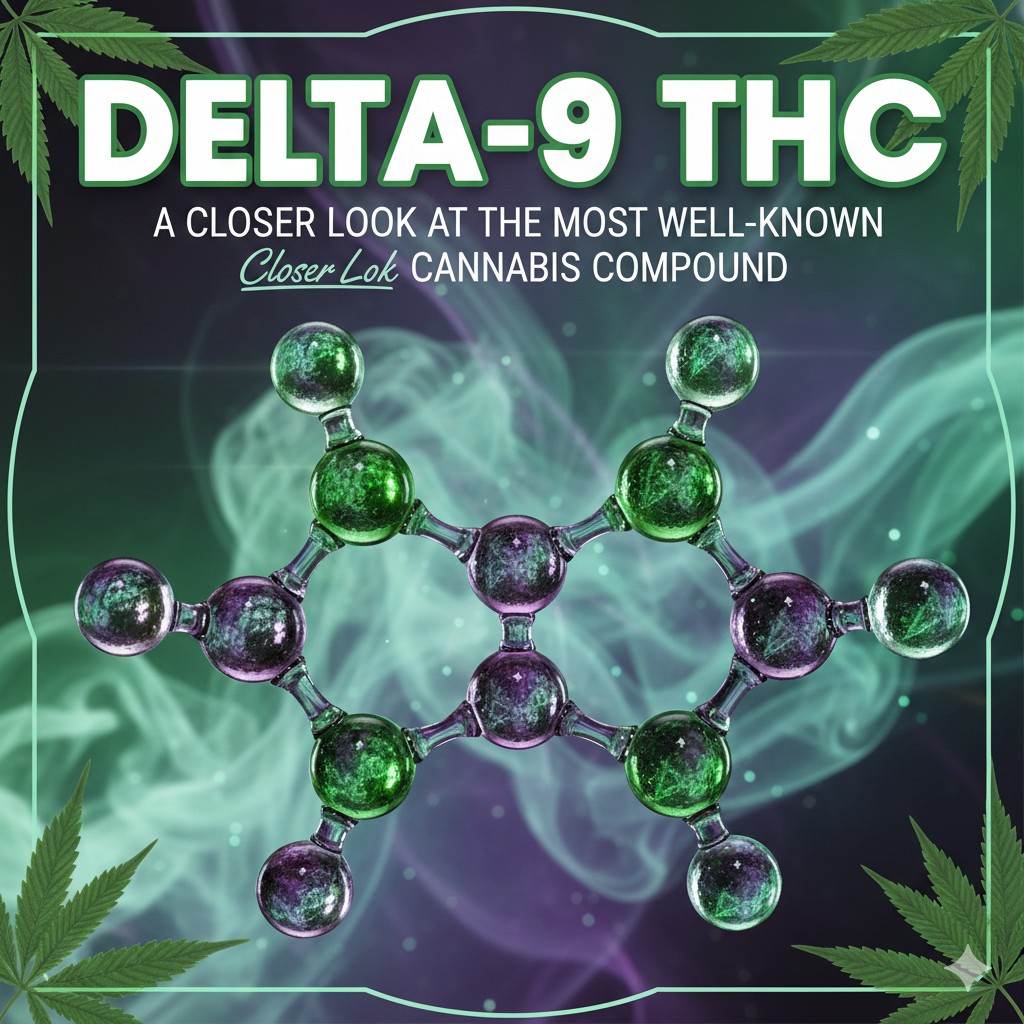
Of all the cannabinoids found in cannabis, delta-9 THC is the most recognized and most studied. It has shaped public perception of cannabis for generations and remains the primary reference point in discussions about legality, safety, and chemistry.
But what makes delta-9 unique compared to other THC isomers? And why is it considered the benchmark for cannabis potency?
Let’s explore.
🔍 What Makes Delta-9 THC “Delta-9”?
Cannabinoids are classified by the position of a double bond in their molecular structure. In delta-9 THC, that bond sits on, you guessed it, the ninth carbon atom in the chain.
This small structural detail changes the way the molecule binds to the body’s receptors, influencing:
- Strength of psychoactive effects
- Onset time
- Duration
- Metabolism
This is why delta-9 is considered the “baseline” for studying and regulating intoxicating cannabinoids.
🧠 How Delta-9 Affects the Brain and Body
Delta-9 THC binds strongly to CB1 receptors in the brain and central nervous system. This interaction affects:
- Perception
- Coordination
- Sensory processing
- Memory
- Mood
Because it plays such a prominent role in cognitive and sensory changes, delta-9 has been the focal point of much of the research on cannabis’s short-term and long-term effects.
🔥 Different Ways Delta-9 Is Consumed
Delta-9 can be consumed through:
- Inhalation
- Edibles
- Tinctures
- Concentrates
- Topicals (non-intoxicating when used externally)
Each route yields a different onset and duration. For example:
- Inhaled delta-9 takes effect rapidly but wears off sooner
- Ingested delta-9 takes longer to activate but can feel stronger
These differences are important for understanding individual reactions and dosing considerations.
⚖️ Delta-9 and U.S. Law
In the U.S., delta-9 THC levels are central to cannabis regulation. Federal definitions classify cannabis by:
- Hemp plant material containing ≤0.3% delta-9 THC by dry weight
- Marijuana plant material exceeding that threshold
States, however, may have far more detailed rules regarding:
- Possession limits
- Retail sales
- Licensing
- Testing requirements
- Public consumption restrictions
Because laws differ significantly between states, delta-9’s status varies depending on where someone lives or travels.
🧪 Why Delta-9 Is the Reference Point in Testing
Cannabis and hemp testing labs often calculate:
- Delta-9 THC
- THCA
- Total THC
Delta-9 acts as the baseline cannabinoid against which other THC analogs or isomers (like delta-8 or delta-10) are compared.
⚠️ Public-Health and Safety Notes
Delta-9 THC can produce:
- Impairment affecting coordination
- Slower reaction times
- Increases in heart rate
- Anxiety in some individuals
- Short-term memory changes
Healthcare professionals advise caution for individuals with heart conditions, mental-health concerns, or those taking interacting substances.
📝 Bottom Line
Delta-9 THC is the most well-characterized cannabinoid in cannabis. Its molecular structure, psychoactive properties, and central role in cannabis law make it a key focus of scientific, legal, and cultural discussion. Understanding delta-9 helps lay the foundation for interpreting all other cannabinoids in the modern landscape.